
rockfrank talk to...Tony Carey
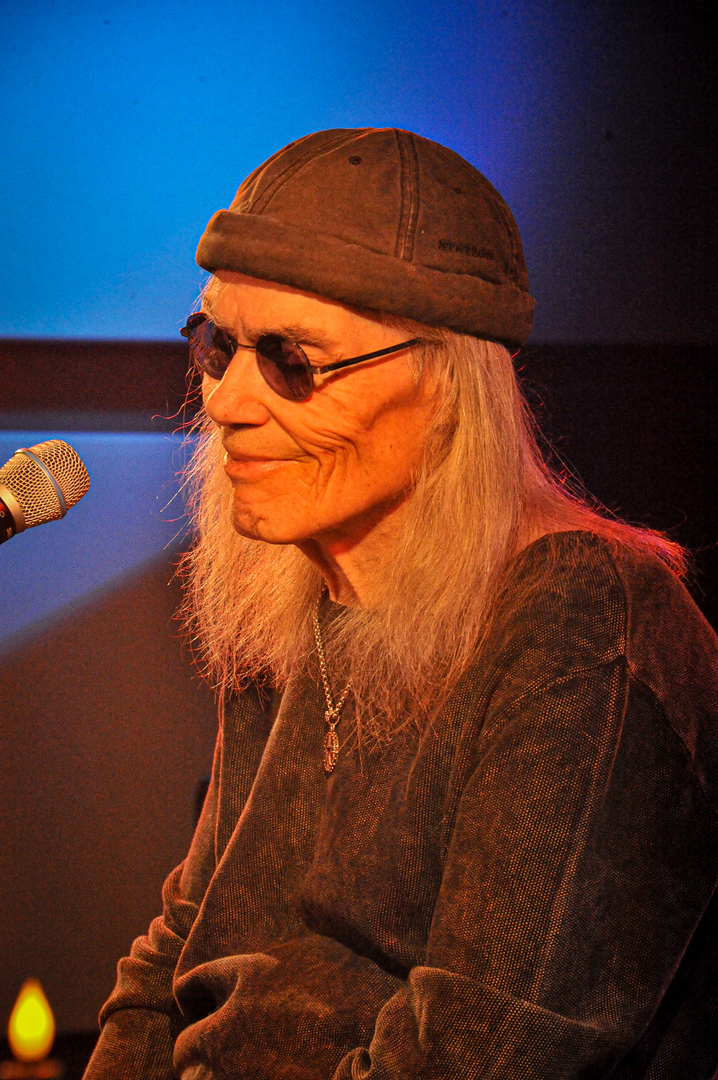
photo by: Marion Carey
rockfrank met with American singer-songwriter and former Rainbow keyboardist Tony Carey for a relaxed conversation in Grafschaft (Altenahr district, Germany), discussing his musical past, present, and music in general.
rockfrank: Tony, when you joined Rainbow in 1975, you were still very young. What was it like recording Rising back then? Did you realize at the time that you were creating something truly special musically?
Tony Carey: No, not at all. Now, 50 years later, I sometimes look back and think about what those shows were like back then … (lost in memories).
Let me put it this way: the biggest venue we played in Germany during the 1976 Rainbow Rising tour was the Jahrhunderthalle in Frankfurt. We played in England and Japan, and even Australia. Our opening act was AC/DC – they could drink just as much as I could.
Before the tour, everything just fell into place at the right time. My school band, which was also my first band, had landed a record deal with ABC Dunhill Records. The label had invested more than a million dollars in us and sent us from Connecticut to Hollywood, California, in 1973. I lived in a bungalow at the Chateau Marmont on Hollywood Boulevard for seven months. That was pretty special, at least by the standards of 50 years ago.
But at the studio on the Sunset Strip, we just couldn't get anywhere with the recordings. They'd given us the wrong producer – Gary Katz from Steely Dan. He never gave us a chance to really learn how to play together in the studio. Then he simply fired some of the band members – everyone except me and two buddies of mine, the guitarist and the singer. He sent the bass player and the drummer home. But for seven or eight months, we didn't get anything recorded. Absolutely nothing. There were too many drugs involved, too much … hell, what do I know? And on top of that, everything had to be perfect. Things just wouldn't work that way today.
One day, we were in the rehearsal room with Jethro Tull, Alice (Cooper), 'Skunk' Baxter, Irving Stein (the studio manager) … and Ritchie Blackmore, who was looking for a keyboard player. He was rehearsing in the next room and could hear me playing through four walls. He'd already tried out just about every Hammond organ player on the planet. Then he offered me the job.
rockfrank: Tell me one fond memory you have of Ronnie James Dio.
Tony Carey: He was just a great guy. He was 14 years older than me, so I saw him more like an uncle. He was very experienced and already 35 years old when I met him. I loved Ronnie – he was awesome. He was from upstate New York, a real all-American guy. Half of his crew (his band, Elf) came from Cortland, New York, his hometown, too. It was a perfect fit.
That was 50 years ago now, but I loved Ronnie!
rockfrank: Sadly, he died far too young, in 2010.
Tony Carey: He had a similar type of cancer to the one I had: stomach cancer. I had bladder cancer. But he also felt that there was just too much shitty food on the road, the catering and all that. And he waited too long. He was only 69. It was a tragedy.
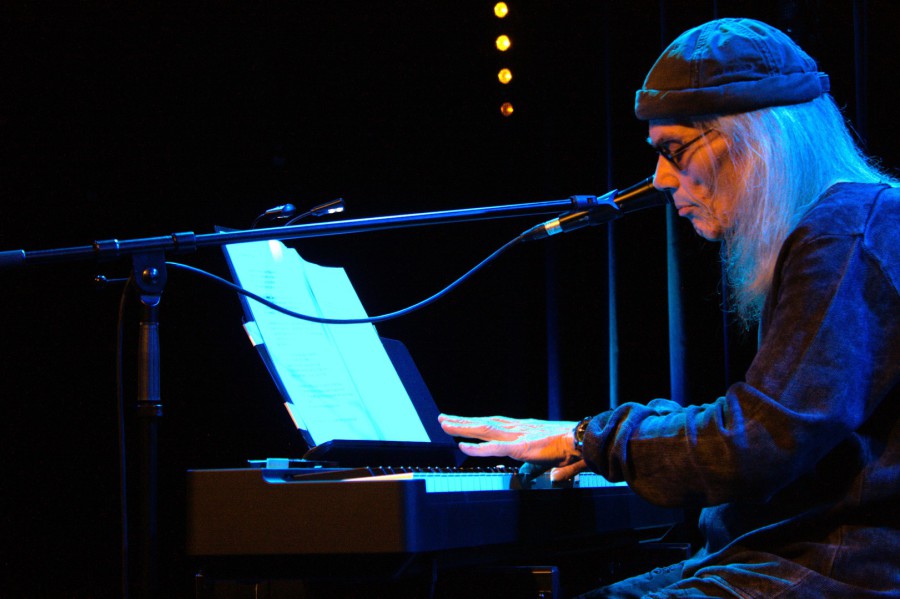
photo by: Marion Carey
rockfrank: From wild wolf to tame dragon. “Run with the Wolf” and “Tabaluga” – two worlds that couldn't be more different. How did this unusual musical journey come about?
Tony Carey: Actually, it wasn't a journey from one to the other. I've known I was a musician since I was five years old. I play everything. I never had any formal classical keyboard training. I started out learning the double bass and played in my school orchestra, the All-Connecticut Orchestra. When I was 17, I had to decide whether to go on a concert tour with the orchestra or disappear. I chose Plan B and disappeared.
But here's my point: I don't care what kind of music I play. You Germans have an unhealthy habit of stereotyped thinking. When I first came here in 1978, people would say, "That's Schlager, that's crap, so something else must be good," and so on. What you call Schlager, we'd usually call country music in America, just with German lyrics. And if people happen to like something – elevator music or whatever – then that's what it is. Okay, there I go pigeonhole thinking myself.
There's a rule of thumb in the studio: If the vocals are too loud, you end up with Schlager. Take Frank Sinatra, for example. All you hear is his voice. Or Elvis. But I've never really cared much about putting music into categories. And that attitude has changed over the past 50 years, too. Music is music.
rockfrank: The ’80s are long gone, but “Room with a View” still carries that era within it. When you listen to the song today, what comes through more strongly for you: memories of the ’80s or the longing that was part of it back then?
Tony Carey: First of all, if you can remember the ’80s, you weren't really there!
But your question ties into another one: Am I tired of playing my own songs all the time? No. Because every time I play one of my songs, it's a snapshot of that moment, of how I'm interpreting it right then and there. I might change the key, or play the song a little longer or shorter. I learned that from Miles Davis – Bitches Brew, those live jams. I saw Miles when I was 16. He played one song for over 50 minutes with his back to the audience, while Herbie Hancock and Jackie McLean (members of Miles Davis's band) just played.
But when you're in a band with a very specific sound, like Foreigner, then “I Want to Know What Love Is”has to sound the same every time. Otherwise, people complain because it doesn't sound like the record. Thank God I'm not in that position. I can sound however I want. I play all my songs on guitar or piano. Or with full playback on TV, for all I care. Whenever I'm on TV, I always position the microphone about six feet to my right. Seriously, I do.
rockfrank: Your mother was a painter. Do you think a painting, just like a song, can capture a moment in time or a particular era?
Tony Carey: In the past, paintings were always tied to the Church. They were often commissioned by the Church through the nobility. We wouldn't have the Sistine Chapel if it hadn't been commissioned by the Church or the aristocracy.
But as far as your question goes, that's hard to say.
Tony asks to have the question read to him again, then adds:
Yes, it can. The Expressionists, around 1910, 1915, 1920, or the French Impressionists, from 1860 to 1880. When you look at artists from those epochs, or someone like Dalí or Picasso and the like – all those “crazies” (referring to representatives of Surrealism and Cubism) – then yes, a painting or a work of art by them can capture a moment in time.
rockfrank:Planet P Project was particularly successful in Russia and the former Soviet Union, much like Supermax. Why do you think your music was so popular there?
Tony Carey: That's the first I've heard of it. The reason I don't know about that is that Russians don't pay royalties. A Russian record label wanted to release my catalog in Russia, and when I suggested we work out a deal, they said, "What deal? We don't pay anything. But you'll become popular in Russia." I said, "Thanks, but no thanks."
But that's funny. That's great. I know we were very successful in Sweden and Norway, but Russia is news to me. I love that. Dosvidaniya! (Goodbye!)
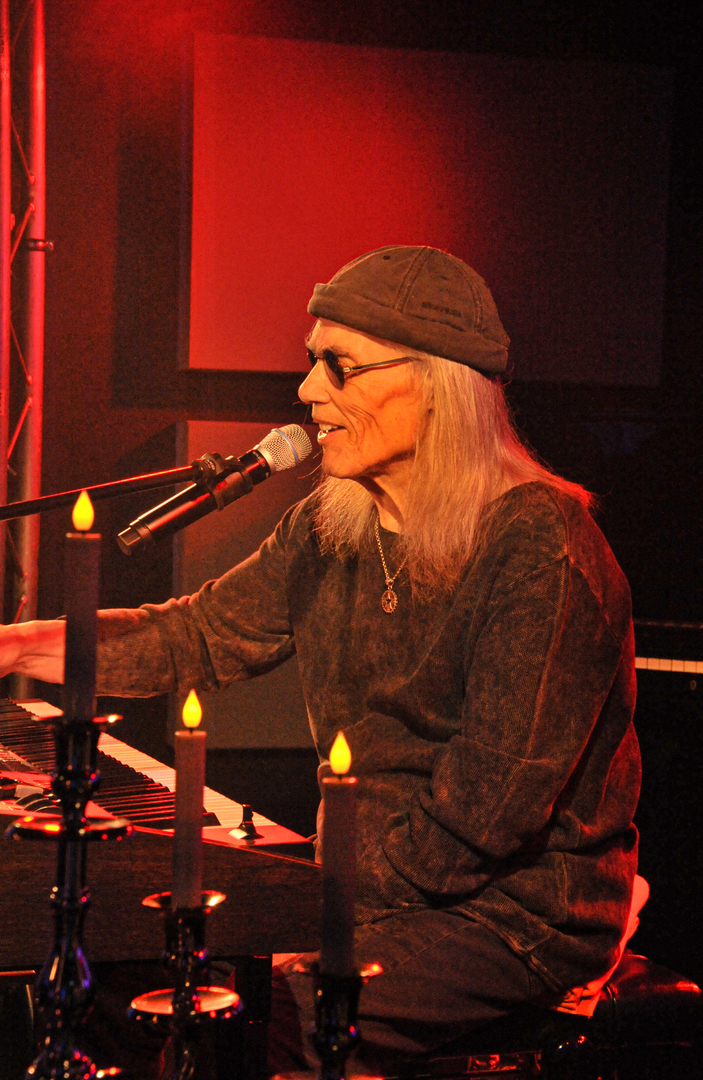
photo by: Marion Carey
rockfrank: As a producer, you've worked with artists such as Joe Cocker, John Mayall,Pat Travers, Jennifer Rush, Chris Norman, and Peter Maffay. Who left the strongest impression on you?
Tony Carey: Definitely Peter. He's incredibly persistent, has an iron will, and he's 77 years old. He's working on a new album right now with Johannes Oerding, and he's going on tour next year. He doesn't do it for the money, but simply because he's so damn stubborn.
I had to laugh when he said a few years ago, "This is my farewell tour." I said, "Yeah, yeah – farewell tour number one." (laughs) It's incredible that he's still so active. We've even played together a few times over the past several years.
rockfrank: Rock, hard rock, progressive rock, film scores, singer-songwriter music – which genre do you feel most at home in these days?
Tony Carey: Singer-songwriter music. Although I've never actually produced a singer-songwriter. Chris Norman comes closest, though. He considers himself a singer-songwriter.
When I produced him, he was expecting his fifth child. That was 40 years ago. It was a difficult time, and he couldn't make it to Germany. So I produced the A-side of his record entirely on my own in my studio and then sent it over to him. He was happy with everything. But it would have been good if he'd been able to do it in person, too. To me, he's a singer-songwriter.
rockfrank: What do you think you would be doing for a living today if you hadn't become a musician?
Tony Carey: I'd be a marine biologist. If I were young and fit, I'd be working on a fishing boat in the Bahamas, out on the open sea. I've caught just about every kind of fish there is to catch. I've caught tuna five times, among other things, weighing up to 800 pounds.
rockfrank: Didn't your father do something similar?
Tony Carey: My father was an entomologist, an insect researcher.
rockfrank: Looking back on your entire musical journey, is there still anything you'd really like to experience, record, or accomplish musically?
Tony Carey: For one thing, I've done a lot. And I don't do these small gigs for the money. But what else am I supposed to do? I'll be turning 73 in two weeks. In America, the retirement age is already 65. In Germany, it's 67.
Most of my wishes have come true. I've managed to get through some truly catastrophic times, with a little help from the universe. And I'd like to express my gratitude for that once again.
But I never say never. If the phone rings and it's Celine Dion calling because she wants to record another big duet, I'll be there.
rockfrank: When people head home after your show tonight, what do you hope they'll take away from the experience of seeing Tony Carey?
Tony Carey: “This guy can really do it!”
My records are full of music, but they don't represent what I do today at all. Tonight's show is called Songs & Stories. I paint a picture of my childhood in the 1950s through anecdotes and songs.
It's an interesting, bizarre situation. If you were selling Lamborghinis, all you'd have to do is hand a potential customer the keys, and everything would be clear. When I sing a song, I have to explain the lyrics to the audience. I tell them what the song is about, and then I sing it. It's bizarre. Like I said, the Lamborghini speaks for itself.
rockfrank
Editorial assistance: Sandra B.
 Druckversion
